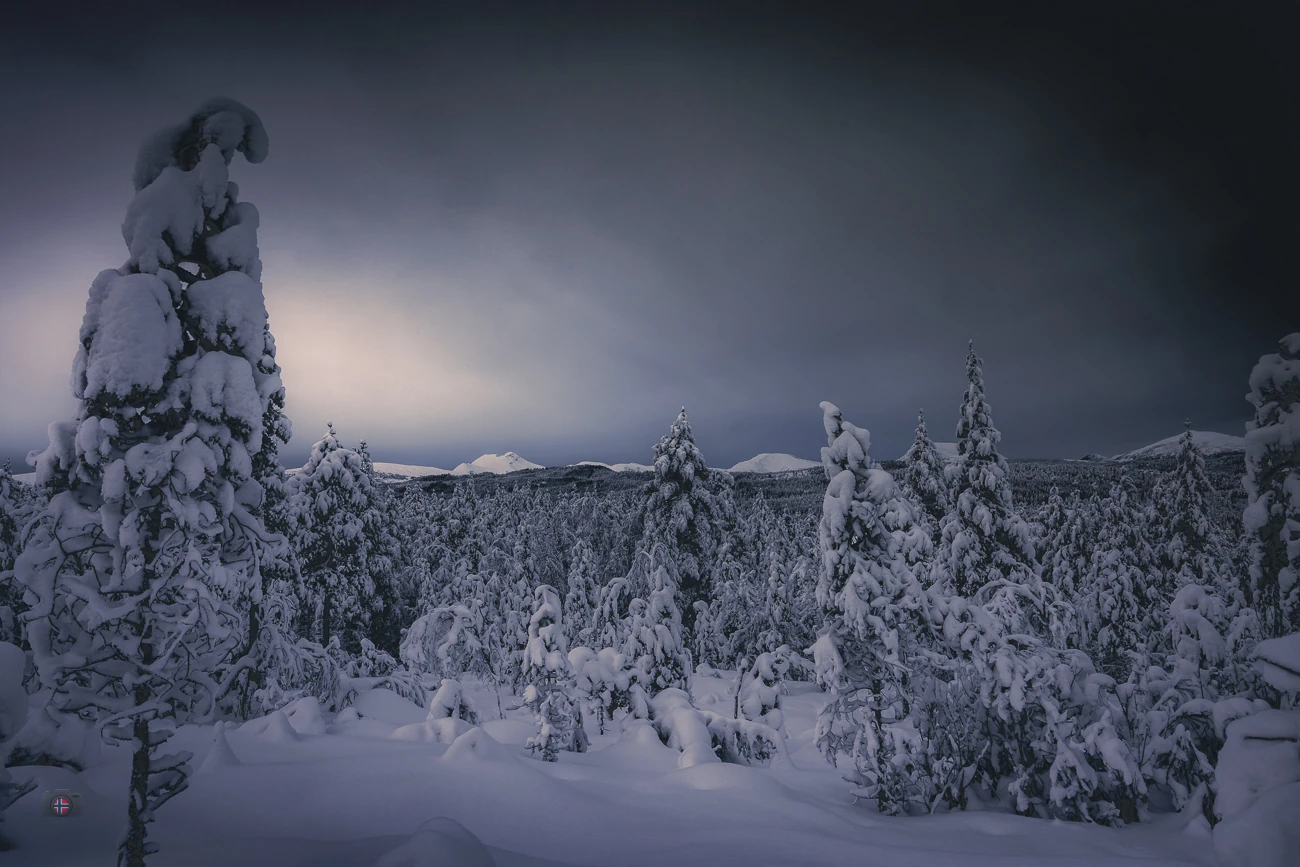
When snow covers a landscape, more than its appearance changes. Light behaves differently, too. Areas that were dark only weeks ago suddenly reflect much of the incoming light. Details disappear, colours become muted, and even familiar places look unfamiliar.
That is exactly what makes winter photography interesting to me. But snow also presents a few challenges for the camera and for how we compose our photographs.
Why snow often looks grey in photographs
Anyone who has photographed a snowy landscape will know the problem: the snow looks brilliantly white in front of us, yet grey in the photograph.
This happens because of exposure metering. Cameras often aim to render the overall scene at a middle brightness. When a large part of the frame is bright snow, automatic exposure can therefore make it look too dark.
Positive exposure compensation of around +0.7 to +1.7 EV can be a useful starting point. The amount actually needed depends on the light and the composition.
More important than any fixed value is the histogram. It helps me judge the bright snow without losing important detail to overexposure. In manual mode I adjust the exposure settings directly.
Getting white balance right in snow
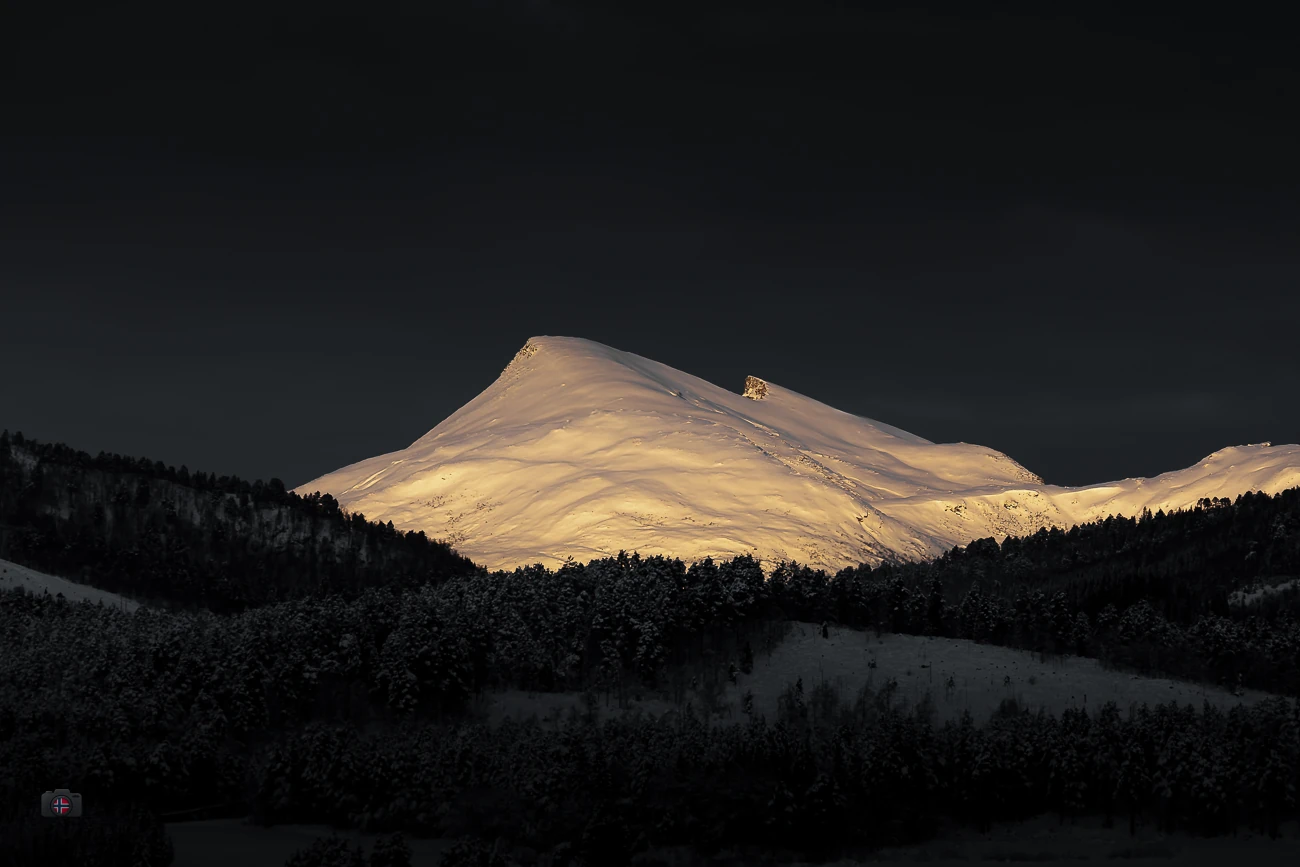
Snow is not always white. In the shade it can appear blue, while low sunlight gives it warmer tones. Under an overcast sky, it often looks cool and almost colourless.
Automatic white balance sometimes tries to neutralise these colours. That can remove some of the atmosphere that made the scene interesting in the first place.
That is why I prefer shooting in RAW. It lets me adjust white balance later in Lightroom with considerable flexibility. But I do not insist on making every snow scene perfectly neutral. A cold winter morning is allowed to look blue.
When snow hides the landscape’s structure
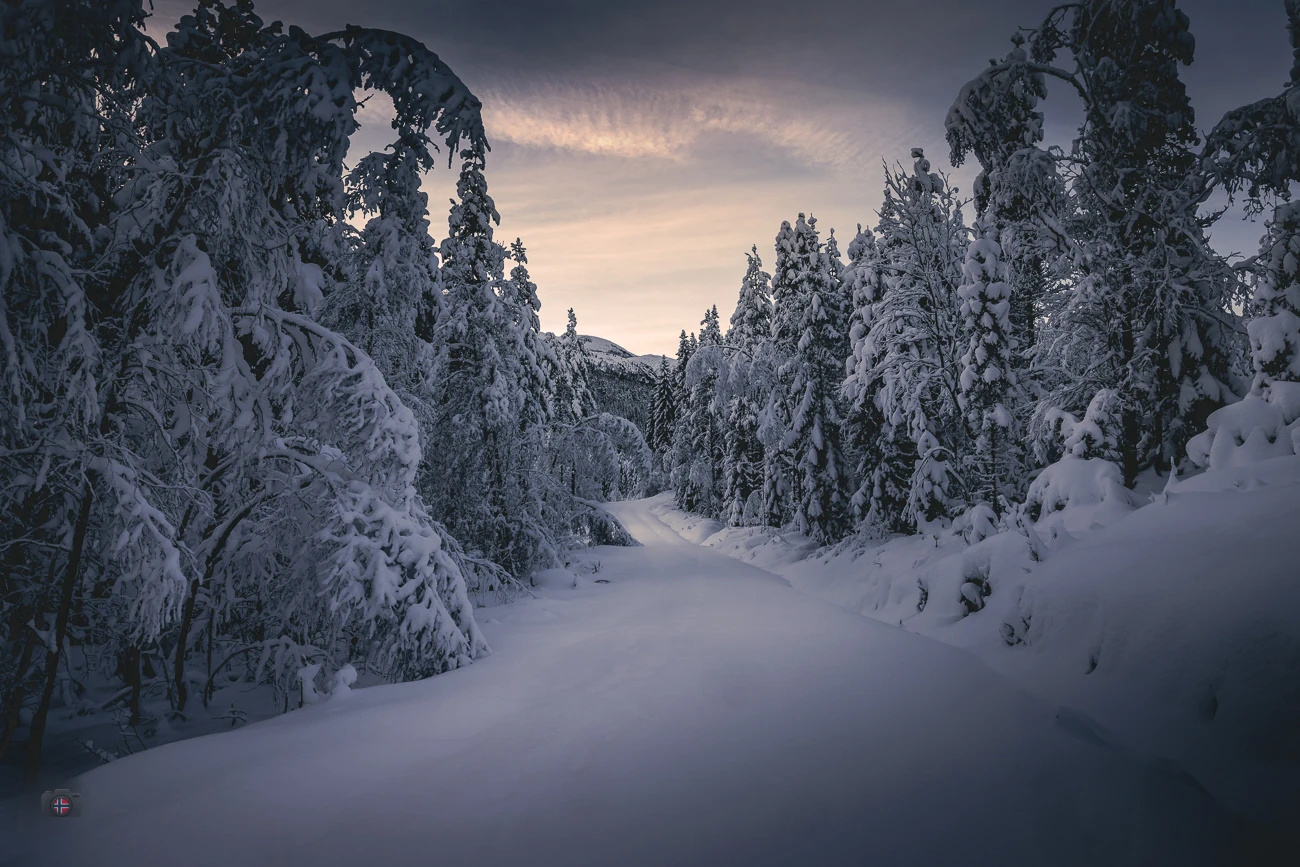
A completely snow-covered landscape can be surprisingly difficult to photograph. Paths disappear, small features are buried, and large areas suddenly look uniform.
In diffuse light, there may also be few shadows to give the scene depth.
I then look deliberately for structure and contrast. A single dark rock, a tree trunk, a track in the snow or the edge of a snowdrift may be enough to give the image a clear composition. Minimalist landscape photography rarely needs many elements.
Camera settings for winter landscapes
My settings depend on the subject and the available light. For a classic winter landscape, I often start between f/8 and f/11, with ISO kept as low as practical.
When shooting handheld, I make sure the shutter speed is fast enough. With a tripod, I can use longer exposures when the subject remains still.
Falling snow is different. Fast shutter speeds can freeze individual snowflakes, while slower speeds turn them into bright streaks. There is no single setting that works for everything. What matters is the effect I want in the finished photograph.
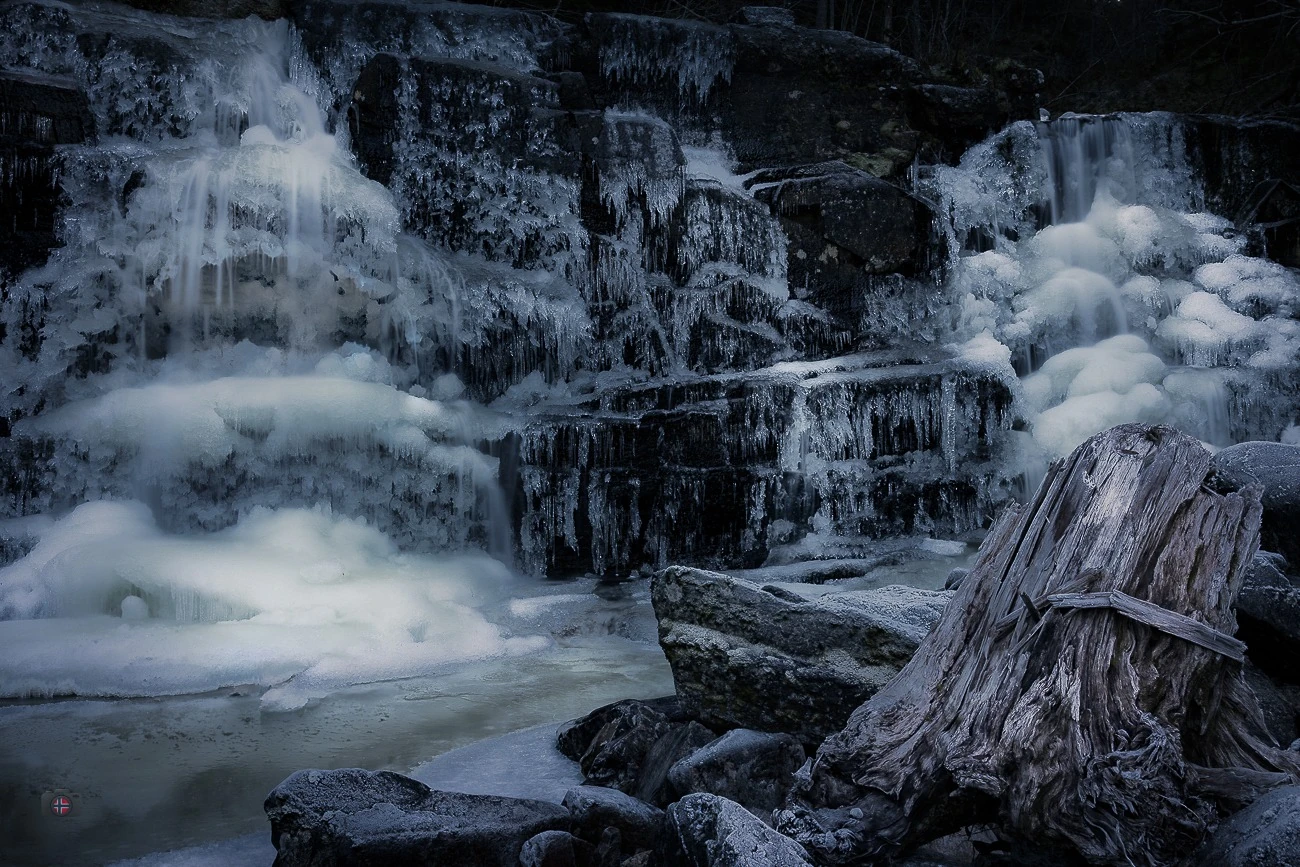
Snow does not always have to look welcoming
Winter photography is often associated with blue skies, sparkling snow and warm sunlight. Such images can be beautiful. I am often more interested in winter’s other side.
A dark rock in a white landscape. A horizon that has almost disappeared. Fog drifting over snow. Or a single shape that barely separates itself from the background.
Subjects like these do not need strong colours. Sometimes an image gains its character from just a few shades of grey. In Lightroom, I do not try to brighten every dark area. Shadows can remain when they serve the photograph.
Finding small subjects in winter
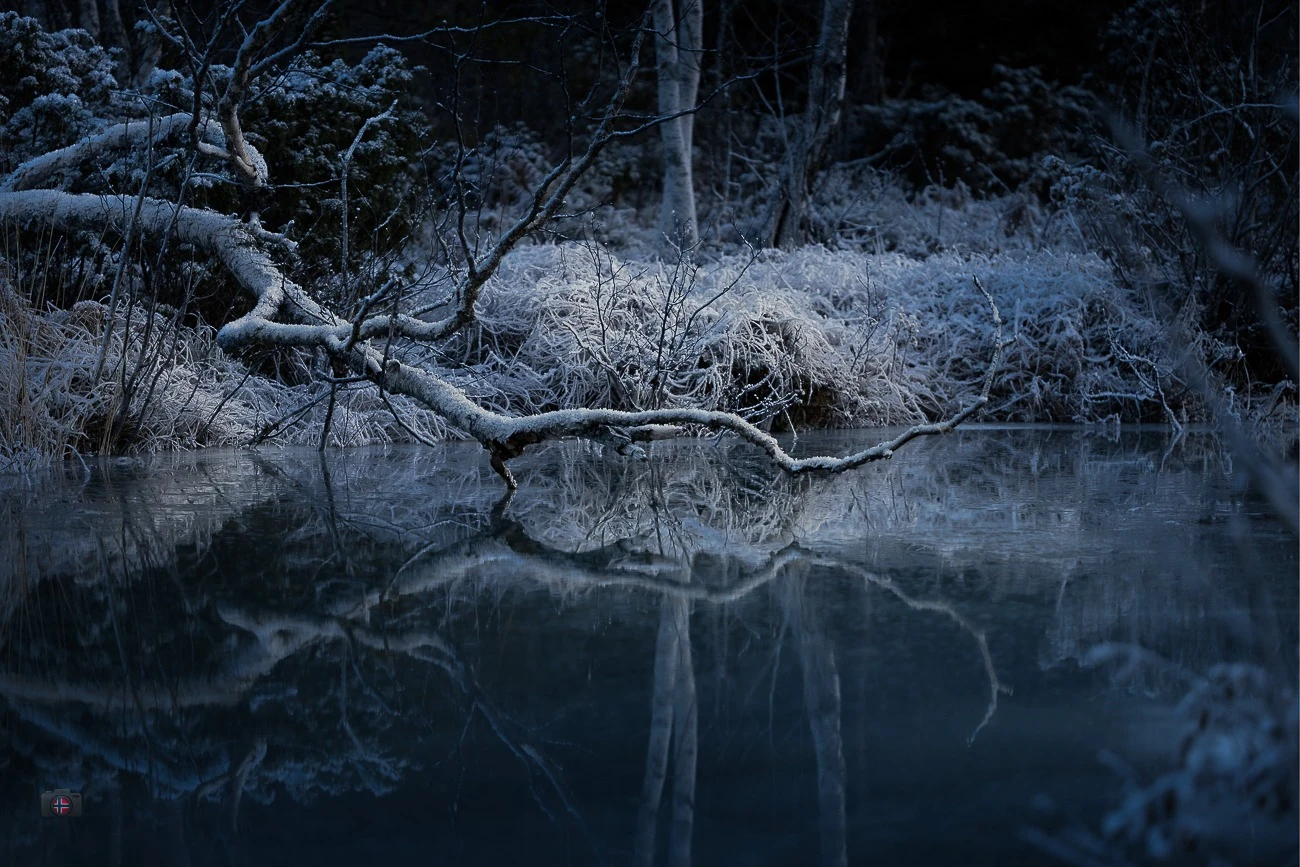
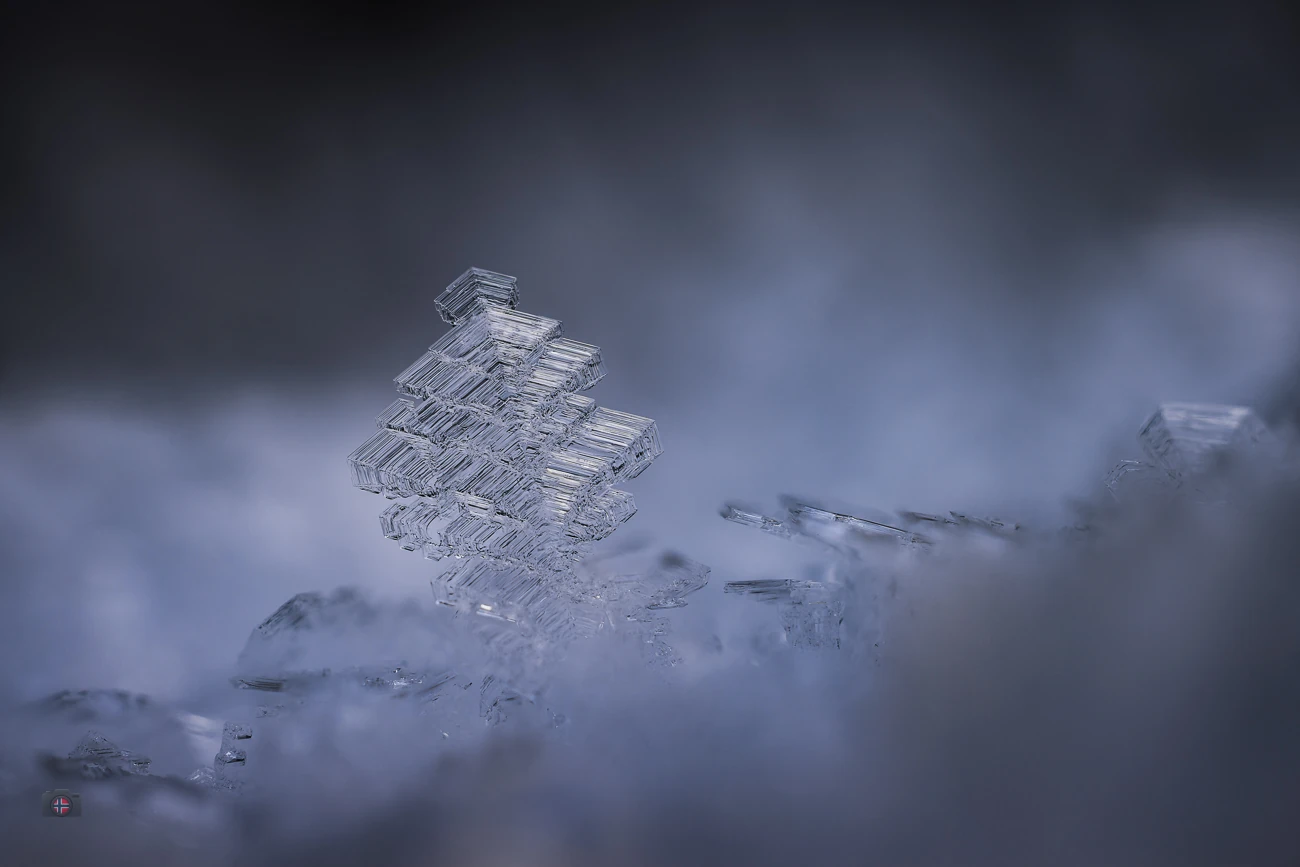
Wide snowy landscapes are not the only subjects worth a closer look. Tiny structures form on branches and frozen surfaces, often becoming clearer in backlight or against a dark background. For details like these I look for a quiet composition, pay close attention to the plane of focus and avoid a distracting background.
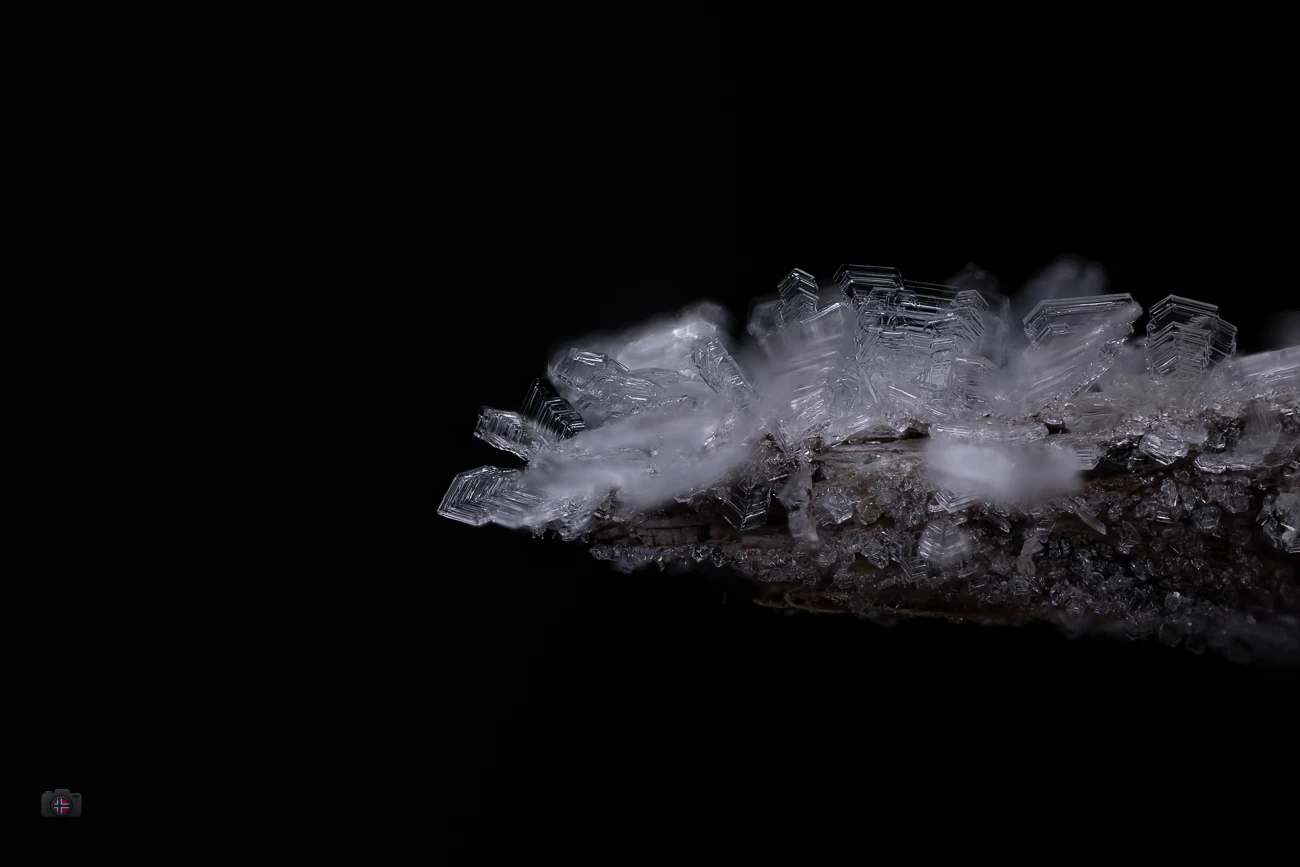
With very small subjects, depth of field becomes shallow quickly. Even a slight change in camera position can determine whether the fine lines stay sharply defined.
Photographing in the cold
Cold conditions also require some care with equipment. Batteries temporarily deliver less usable power in low temperatures, so I try to keep a spare battery close to my body.
Extra care is needed when bringing a cold camera into a warm room. The temperature change can cause moisture to condense. I therefore let the camera warm up slowly inside its closed bag. I also protect the lens from snow and moisture.
Winter simplifies the landscape
Perhaps this is what interests me most about photographing snow. Winter removes much of what usually defines a landscape. Colours fade, small details are covered and familiar shapes change.
What remains are lines, surfaces, light and shadow. We only have to learn to see them.
Leave a Reply